As of 21 October 2026
Re-contracted output, restarts and uprates, and new reactors: the fuel each kind of deal would need, set against the plants that make it
Home • History and Policy • What the Data-Center Deals Commit the Fuel Cycle To
Abstract
Since 2024, technology companies have signed a long run of agreements with nuclear generators and developers, and the headline capacities add up quickly [1] [2]. For the fuel cycle, though, they are three different things. Some sell existing output to a new buyer. Some restart a closed plant or raise the power of a running one. And some promise reactors that have not been built.
The agreements announced by 21 October 2026 sort into those three kinds. The second and third would need a known quantity of fuel each year, set beside the plants that convert, enrich and supply it. The arithmetic of enrichment is settled. The uncertainty lies almost entirely in which agreements become reactors, and when.
The Question
Every few weeks another technology company announces a nuclear deal, and the numbers are large: a gigawatt here, five gigawatts of options there, twelve gigawatts in a master agreement [2] [17]. It is natural to ask what all of that means for uranium, conversion and enrichment. Does the fuel industry now have to grow to meet a wave of new demand from data centers?
It depends on which kind of deal you are looking at. Chapter 25 of The Nuclear Fuel Cycle: A Complete Primer describes the demand from artificial intelligence as an accelerant applied to a supply gap that already existed, and notes that the agreements “are not all equivalent” [51]. For fuel, that distinction is the whole story [3] [4] [5] [6].
Three Kinds of Deal
The first kind re-contracts output that already exists. A plant that ran last year and runs for a new buyer next year loads the same fuel either way. Nothing changes at the mine, the conversion plant or the enrichment plant.
The second kind adds output from the existing fleet, either by restarting a closed plant or by raising the rated power of an operating one, which the industry calls an uprate. That is genuinely new demand, but for a fuel the industry already makes in quantity: uranium dioxide enriched below 5 percent.
The third kind is new reactors. Most of the designs involved are advanced reactors, and most of those need high-assay low-enriched uranium, or HALEU, enriched to between 5 and 20 percent. That is the fuel for which the least supply exists.
Existing Output, Re-Contracted
Six agreements fall wholly or mainly in the first kind, and together they cover about 7,400 megawatts. The largest are Talen’s sale of its Susquehanna output in Pennsylvania to Amazon [7], Meta’s contracts with Vistra’s Perry and Davis-Besse plants in Ohio [3], and Amazon Web Services’ purchase from Vistra’s Comanche Peak in Texas [9]. Table 1 gives each one.
Meta also takes the whole output of Constellation’s Clinton plant in Illinois from June 2027 [8]. Most of what Amazon agreed with Constellation for Calvert Cliffs in Maryland is existing output; the rest is an uprate [4]. And in Finland, Google has agreed to buy up to half the output of Fortum’s Loviisa plant for 22 years [10].
None of this adds fuel demand compared with today. What it does change is how long that demand lasts. The Clinton deal supports relicensing [8]. The Vistra contracts support further license renewals at plants whose licenses run out between 2036 and 2047 [11] [9]. The Calvert Cliffs deal is meant to support a further 20-year renewal [4], and the Loviisa contract is tied to running the plant to 2050, with most of that investment still to be decided [10]. Fuel that would have stopped being loaded when a license expired would go on being loaded.
Restarts and Uprates
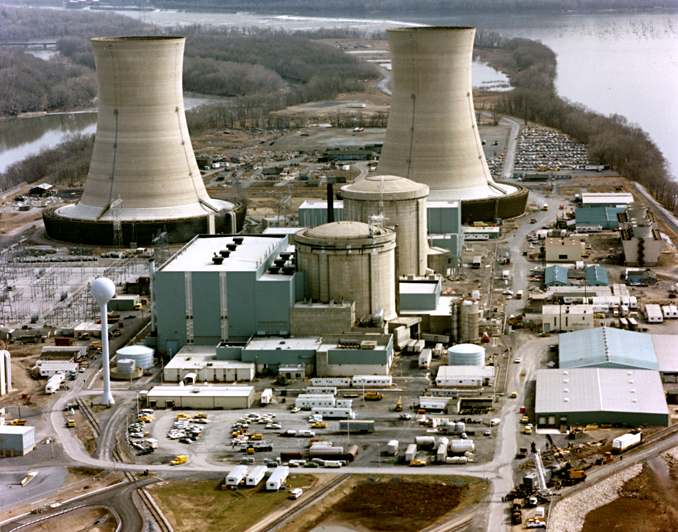
The second kind is smaller and better defined, and it is where new demand for ordinary fuel comes from. Two closed plants are coming back under technology-company contracts. Constellation is returning the 835-megawatt Crane Clean Energy Center, formerly Three Mile Island Unit 1, to service for Microsoft [12], and now targets the second half of 2027 [47].
Crane is well along. The Nuclear Regulatory Commission (NRC) has granted three of the actions the restart needs, including permission on 1 July 2026 to receive new fuel. It issued its final environmental assessment, with a finding of no significant impact, on 18 September 2026 [45] [46]. The exemption and the amendment that would restore the operating license are still before it. Earlier, on 1 June 2026, the federal energy regulator approved moving grid connection rights from another Constellation plant to Crane [13].
The second restart is NextEra’s Duane Arnold plant in Iowa, 615 megawatts, under a 25-year agreement with Google [5]. NextEra’s latest target for its return is late 2028 or early 2029 [48].
Uprates add a further 1,649 megawatts across six agreements. The largest is 890 megawatts at 11 Constellation reactors on six sites in Illinois, Pennsylvania and New Jersey, under a 20-year agreement with Google announced on 6 October 2026 [44]. The first uprate is due by 2028 and all of them by the end of 2032.
The other five are smaller: Vistra’s plants for Meta [3], Calvert Cliffs for Amazon [4], Georgia Power’s Vogtle and Hatch plants under a tariff Google has joined, which still needs state approval [14], and small additions at Clinton [8] and Loviisa [10]. Calvert Cliffs is not one of the six Google sites, and the Google and Amazon agreements together cover about 1,080 megawatts of Constellation uprates, so nothing is counted twice [44].
Restarts and uprates together come to 3,099 megawatts. That is about 3.2 percent of the 96.9 gigawatts of US nuclear capacity at the end of 2025 [15]. It is real growth, but modest, and it runs on the fuel today’s reactors already use.
New Reactors
The third kind is the largest by nameplate and the most varied in how firm it is. It runs from one power purchase agreement for a reactor under construction to a master agreement that the parties themselves call non-binding.
At the firm end, the Tennessee Valley Authority has agreed to buy the output of Kairos Power’s 50-megawatt Hermes 2 reactor at Oak Ridge, with operation targeted for 2030; Google receives the clean-energy credits [1]. Meta has agreed to fund early development of two TerraPower Natrium units, with delivery as early as 2032 and rights to energy from up to six more [6]. Meta’s agreement with Oklo lets it prepay for power from a planned 1.2-gigawatt campus of Aurora reactors in Pike County, Ohio [16]. Neither Meta release states binding terms.
In the middle sit development and option agreements. Amazon is funding Energy Northwest’s development of four X-energy Xe-100 modules at a site in Washington State [17] [18], and holds options toward more than 5 gigawatts of Xe-100 projects by 2039 [17]. On 19 October 2026 it was reported that Amazon, X-energy and American Electric Power had agreed to explore up to 960 megawatts more at a former coal plant in Indiana [19].
Google has two more of this kind. Its 2024 agreement with Kairos targets 500 megawatts by 2035, of which Hermes 2 is the first part [1], and it is funding the preparation of three sites with Elementl Power, with no reactor design chosen [20]. Separately, Crusoe and Blue Energy plan up to 1.5 gigawatts of nuclear capacity for a Texas campus that would run on natural gas first [21].
At the open end, Switch’s master power agreement with Oklo covers 12 gigawatts through 2044 and is non-binding [2]. Equinix holds pre-agreements, a letter of intent and a pre-order with four developers in the United States and Europe [22]. Table 1 sets all of the agreements side by side, with the fuel each would burn.
TABLE 1. Agreements by kind and fuel, October 2026.
| Agreement | Kind | Capacity (MWe; estimates marked) | Design | Fuel | Target | Status |
|---|---|---|---|---|---|---|
| Talen–Amazon, Susquehanna | Existing output | 1,920 | BWR | UO₂ below 5% | Full by 2032 | PPA |
| Vistra–Meta, Perry and Davis-Besse | Existing output | 2,176 | BWR, PWR | UO₂ below 5% | 2026–27 | PPAs |
| Constellation–Meta, Clinton | Existing output | 1,121 | BWR | UO₂ below 5% | 2027 | 20-year agreement |
| Vistra–AWS, Comanche Peak | Existing output | 1,200 | PWR | UO₂ below 5% | 2027–32 | PPA |
| Constellation–Amazon, Calvert Cliffs | Existing output | about 500 (estimate: 690 less the 190 uprate) | PWR | UO₂ below 5% | Not stated | Announced |
| Fortum–Google, Loviisa | Existing output | up to about 507 (estimate: half of two units) | VVER-440 | UO₂ below 5% | 2028–49 | PPA |
| Constellation–Microsoft, Crane | Restart | 835 | PWR | UO₂ below 5% | Second half of 2027 | PPA; NRC review; final EA issued |
| NextEra–Google, Duane Arnold | Restart | 615 | BWR | UO₂ below 5% | Late 2028 or early 2029 | Agreement; approvals pending |
| Six uprate agreements | Uprate | 1,649 | LWR | UO₂ below 5% | 2028–34 (Georgia not stated) | Conditional or pending |
| TVA–Kairos (for Google), Hermes 2 | New reactor | 50 | KP-FHR | HALEU TRISO | 2030 | PPA; under construction |
| Google–Kairos, remainder | New reactor | 450 (500 less Hermes 2) | KP-FHR | HALEU TRISO | By 2035 | Framework |
| Meta–TerraPower | New reactor | 690, up to 2,760 | Natrium | HALEU metal | 2032–35 | Funding and rights |
| Meta–Oklo | New reactor | 1,200 | Aurora | HALEU metal | 2030–34 | Prepayment mechanism |
| Amazon–Energy Northwest and other Xe-100 options | New reactor | 320, up to more than 5,000 | Xe-100 | HALEU TRISO | 2030s; by 2039 | Funding; options |
| Crusoe–Blue Energy | New reactor | up to 1,500 | Not chosen (BWRX-300 reported) | UO₂ below 5% if BWRX-300 | 2031 | Partnership |
| Google–Elementl | New reactor | 1,800 or more | Not chosen | Not known | 2035 | Site funding |
| Switch–Oklo | New reactor | 12,000 | Aurora | HALEU metal | Through 2044 | Non-binding |
| Equinix (four developers) | New reactor | about 1,274 (sum of four agreements) | Aurora, Kaleidos, Rolls-Royce SMR, Stellaria | HALEU metal, HALEU TRISO, UO₂, fuel salt | 2030s | Pre-agreements |
MWe is megawatts of electricity. BWR and PWR are boiling and pressurized water reactors; LWR covers both. PPA is a power purchase agreement; EA an environmental assessment. TRISO is fuel in coated particles. Sources: existing output and restarts [7] [3] [8] [9] [4] [10] [12] [47] [5] [48]; uprates [44] [3] [8] [4] [10] [14]; new reactors [1] [6] [16] [17] [18] [19] [21] [20] [2] [22]. Existing-output rows exclude uprates, which are shown together.
Existing-output deals and the restarts and uprates all burn ordinary light-water fuel. Almost every new-reactor deal points to HALEU, in one form or another.
The Arithmetic
How much fuel a reactor needs follows from three things: how much heat it makes for each unit of electricity, how much energy each tonne of fuel gives before it is discharged, and how far the fuel is enriched. The first two give the tonnes of fuel loaded each year. The third, through the material balance of enrichment, gives the natural uranium fed to the enrichment plant and the work spent separating it. All that natural uranium must first be converted to uranium hexafluoride. Appendix XII of the primer works through the whole chain [53].
Three units need to be carefully defined. Enrichment work is measured in separative work units, or SWU, a measure of the effort needed to split uranium into an enriched stream and a depleted one. How much energy fuel gives is its burnup, measured in gigawatt-days of heat per tonne of fuel. A gigawatt-year is one gigawatt of electricity for a year.
For an ordinary light-water reactor, the round-number case is fuel at 4.5 percent and a burnup of 50 gigawatt-days per tonne. One gigawatt-year then needs about 22 tonnes of fuel, made from about 226 tonnes of natural uranium, at the 0.3 percent tails assay this site uses throughout. The tails assay is the share of uranium-235 left in the depleted stream. US reactors as a group loaded the equivalent of 176 to 208 tonnes of natural uranium per gigawatt-year in 2024 and 2025 [23] [15], a little less, as you would expect when enrichers run lower tails.
The advanced designs get far more energy from each tonne of fuel, so they load far fewer tonnes. Table 2 sets the cases side by side.
TABLE 2. Fuel for one gigawatt-year of electricity, by design (modeled).
| Design | Enrichment | Burnup (GWd/t) | Efficiency | Fuel (tonnes) | Natural uranium (tonnes) | Separative work (SWU) |
|---|---|---|---|---|---|---|
| Light-water reactor | 4.5% | 50 | 33% | about 22 | about 226 | about 138,000 |
| Xe-100 | 15.5% | 168 | 40% | about 5.4 | 200 to 240 (range for the advanced designs) | 156,000 to 188,000 (range for the advanced designs) |
| Natrium-like fast reactor (study case) | 16.4% | about 150 | 40% | about 6.1 | about 239 | in the range above |
| Natrium-like at the contracted 19.75% | 19.75% | about 150 | 40% | about 6.1 | about 288 | not modeled |
GWd/t is gigawatt-days of heat per tonne of fuel. Tails 0.3 percent. Sources: [17] [24] (Xe-100); [25] (Natrium-like study case); [27] (19.75 percent specification for Natrium’s first cores). The advanced-design ranges cover the burnups and enrichments shown.
The advanced designs load about a quarter of the fuel, but each kilogram of HALEU at 15 to 20 percent takes 37 to 47 kilograms of natural uranium to make, against about 10 for light-water fuel [25]. So per gigawatt-year they need about as much natural uranium as a light-water reactor and somewhat more enrichment work. They are thrifty with fuel, not with uranium. And if Natrium runs on fuel at the contracted 19.75 percent rather than the study’s 16.4, it draws about a fifth more natural uranium [27].
Two gaps in the literature have to be filled by estimate. Kairos has not published the burnup of its commercial design, and Oklo has not published Aurora’s fuel loading. Below, Kairos is assumed to match the Xe-100’s burnup at the commercial KP-FHR’s reported 19.75 percent [26]; the Hermes test reactor’s fuel is enriched up to 19.55 percent [49]. Aurora is assumed to match the Natrium-like case. Fuel salt for Stellaria, and the reactors Elementl has not yet chosen, are left out.
What the Deals Would Need
What would these agreements need if every stated date were met? Table 3 places each restart, uprate and new reactor in the first of 2030, 2035 or 2040 that falls on or after its own target. Several of those dates are early for designs that have not yet loaded commercial fuel, so the table is an upper case, not a forecast. The figures are annual reloads of running plants; first cores come after.
TABLE 3. Annual fuel needs of restarts, uprates and new reactors, if every stated date were met (modeled).
| Year | Fuel | Capacity (MWe) | Natural uranium (tonnes, modeled) | Conversion (tonnes of uranium as UF₆, modeled) | Separative work (SWU, modeled) | HALEU (tonnes, modeled) |
|---|---|---|---|---|---|---|
| 2030 | UO₂ below 5% (restarts, uprates) | 1,490 | 307 | 307 | 187,000 | — |
| 2030 | HALEU TRISO (Kairos burnup estimated) | 50 | 11 | 11 | 8,000 | 0.2 |
| 2035 | UO₂ below 5% (restarts, uprates incl. Constellation–Google, Blue Energy if light-water) | 4,599 | 943 | 943 | 575,000 | — |
| 2035 | HALEU TRISO (Kairos burnup estimated) | 820 | 164 | 164 | 130,000 | 3.8 |
| 2035 | HALEU metal (includes 1,200 MWe Aurora estimated as Natrium-like) | 3,960 | 850 | 850 | 665,000 | 21.7 |
| 2035 | Total | 9,379 | 1,957 | 1,957 | 1,370,000 | 25.5 |
| 2040 | UO₂ below 5% (restarts, uprates incl. Constellation–Google, Blue Energy if light-water) | 4,599 | 943 | 943 | 575,000 | — |
| 2040 | HALEU TRISO (Kairos burnup estimated) | 5,500 | 1,010 | 1,010 | 788,000 | 26.7 |
| 2040 | HALEU metal (includes 1,200 MWe Aurora estimated as Natrium-like) | 3,960 | 850 | 850 | 665,000 | 21.7 |
| 2040 | Total | 14,059 | 2,803 | 2,803 | 2,028,000 | 48.4 |
Assumptions: capacity factor 91 percent for existing plants and 90 percent for new ones; light-water fuel at 4.5 percent and 50 GWd/t; Xe-100 at 15.5 percent and 168 GWd/t; Kairos at 19.75 percent and 168 GWd/t (estimate); Natrium and Aurora at 16.4 percent and 150 GWd/t (Aurora an estimate); efficiency 33 percent for light-water reactors, 40 percent for Natrium, Aurora and the Xe-100, 43.75 percent for Kairos; tails 0.3 percent; natural feed 0.711 percent. Conversion equals natural-uranium feed; one tonne of uranium as UF₆ is 1.479 tonnes of UF₆. Totals are sums of the rounded rows. Excludes Switch–Oklo, the undated Equinix agreements, Elementl and Stellaria. Sources: [44] [3] [6] [16] [5] [12] [8] [4] [10] [14] [17] [1] [21] [25] [24] [26] [15].
The demand for ordinary fuel is modest and near. It is about 300 tonnes of natural uranium a year by 2030, almost all from the two restarts, rising to about 940 tonnes by 2035 once the Google uprates and the Blue Energy plant, if it uses light-water fuel, are running.
The HALEU demand is larger, later and much less certain: about 25 tonnes a year by 2035 and about 48 tonnes by 2040. Much of the 2035 figure rests on Meta’s deals. The two Natrium units Meta is funding account for 3.8 tonnes, and the six to which it only holds rights for 11.3 tonnes. The Aurora estimate adds 6.6 tonnes.
First Cores
Table 3 counts reloads, but a new reactor needs a full first core before it needs its first reload. So does a plant that was emptied when it closed, and Crane and Duane Arnold were both defueled after shutdown.
Take a full light-water core as four and a half years of reloads, with a third of the core replaced every 18 months and a lower average enrichment, 3.5 percent, as first cores have. On that basis Crane would need roughly 76 tonnes of fuel and Duane Arnold roughly 56. Together they would draw about 1,000 tonnes of natural uranium and about 570,000 SWU, once. These are estimates, not published core loadings.
An Xe-100 core holds about 224,000 pebbles [26], each with about 7 grams of uranium, which follows from the uranium-235 in a fresh pebble [24]. Filled entirely with equilibrium fuel, that is about 1.6 tonnes of HALEU per module.
Scaled up, Energy Northwest’s four modules would need about 6 tonnes, and a 5-gigawatt build-out of about 62 modules roughly 98 tonnes [17]. First cores are often loaded partly with graphite or lower-enriched pebbles, so these are upper estimates.
For the other designs the first-core masses have not been published. TerraPower’s supplier for Natrium’s first cores has disclosed only the value of the order, up to about $375 million over 18 months for delivery in 2027 and 2028 [27].
Against the Supply
Those needs sit beside the plants that would meet them, taking the steps of the front end in order: conversion, enrichment and then HALEU.
Conversion
All of the natural uranium in Table 3 passes through a conversion plant first. The 2035 total, 1,957 tonnes of uranium, is a little under 30 percent of what Metropolis Works, the only US plant, is projected to produce in 2026, about 6,760 tonnes of uranium [28] [29]. Against the recent combined output of the three Western plants it is about 8 percent [29].
On a world scale it is smaller still, about 3 percent of world reactor requirements in 2024 [30]. The difficulty is less the size of the extra demand than the lack of new plants: no new Western conversion plant is licensed or under construction, and the four US projects are at the pre-application stage or earlier, the first aiming for output around 2030 [29]. Conversion and Deconversion, posted on this site on 25 October 2026, covers those projects and the three Western plants in more detail [29].
Enrichment
For light-water fuel, enrichment is not the bottleneck. The 2035 total, about 1.37 million SWU a year, is about a tenth of what US reactor operators bought in 2025 and about a quarter of Urenco USA’s capacity once its current expansion is complete [23] [31] [32]. Existing centrifuge plants and their expansions can supply the light-water share.
The timing is awkward, though. That demand arrives while US buyers are replacing Russian enrichment, about a quarter of their 2025 purchases, before the ban on Russian imports takes full effect in 2028 [23] [33].
The HALEU share is different in kind. About 0.8 million SWU a year in 2035, and 1.45 million in 2040, must come from plants licensed to enrich above 10 percent.
That matters because uranium enriched to 10 percent or more is Category II material once a site holds 10 kilograms or more of uranium-235 in it, which brings heavier security rules [50]. None of the large Western centrifuge plants is licensed to enrich that far; Urenco USA’s authorization runs to 10 percent [33].
HALEU
That leaves HALEU, where the supply is thinnest. The suppliers in October 2026, by how far along they are:
Operating. Centrus’s 16-machine demonstration cascade at Piketon, Ohio, made more than 1,900 kilograms under its government contract. Production under that contract finished in June 2026, and the contract ended on 30 September 2026; no commercial deliveries had been reported [35] [36].
Contracted, not built. Centrus’s $900 million task order of July 2026 is for 12 tonnes a year of new capacity at Piketon, with first output by 2029 [35].
Under construction with government support. Urenco’s HALEU plant at Capenhurst in England, production targeted by 2031; capacity not stated [37].
Applied for. General Matter’s application for an enrichment plant at Paducah, filed for low-enriched uranium in September 2026, with a HALEU amendment planned for 2027 [38]. Orano’s Project IKE application at Oak Ridge is for enrichment up to 8 percent [39].
Announced. A plant of about 15 tonnes a year planned by ASP Isotopes’ Quantum Leap Energy at Pelindaba in South Africa, contracted to supply Natrium’s first cores and up to 150 tonnes over 2028–2037 [27], now the subject of a binding heads of agreement with Necsa that names no technology, capacity or schedule [40]; and Nusano’s concept for units of 5.9 tonnes a year from 2031 [41].
Finite stocks. Just under 10 tonnes expected from EBR-II fuel at Idaho by the end of 2028, 5 tonnes of it allocated to Oklo [42], and about 3.1 tonnes from downblending at Savannah River [37].
Set beside Table 3, the 12 tonnes a year of new US capacity under contract is about half of what these agreements alone would need in 2035, if every stated date were met, and a quarter of what they would need in 2040 [35]. And these agreements are not the only source of HALEU demand. The Department of Energy’s environmental impact statement cites projections of about 50 tonnes a year for all commercial use by 2035 [43].
The Deals in Fuel, October 2026
- Existing output re-contracted: about 7,400 MWe in six agreements; no new fuel demand, but four are tied to relicensing or life extension [8] [3] [4] [10].
- Restarts and uprates: 3,099 MWe, about 3.2 percent of US fleet capacity [15]; about 300 tonnes of natural uranium a year by 2030 and about 640 tonnes by 2035 (modeled; about 940 tonnes if Blue Energy is light-water; Table 3), plus first cores of roughly 76 tonnes (Crane) and 56 tonnes (Duane Arnold) of fuel (estimates).
- New reactors with stated dates and an identified fuel: about 11 GWe by 2040, most of it HALEU designs [6] [16] [17] [1] [21].
- HALEU if every stated date were met: about 25 tonnes a year in 2035 and 48 tonnes in 2040 (modeled), plus about 1.6 tonnes per Xe-100 first core (upper estimate).
- HALEU capacity contracted in the United States: 12 tonnes a year at Piketon, first output by 2029 [35].
- Not in the totals: 12 GW of non-binding Switch–Oklo capacity to 2044 [2], about 1.3 GW of Equinix pre-agreements [22], and 1.8 GW of Elementl sites with no design chosen [20].
What This Means
The data-center deals do not ask the existing fuel industry to grow much. Most of the contracted capacity is output that was already being fueled, and the restarts and uprates add a few hundred tonnes of natural uranium a year by 2030 and under a thousand by 2035. Conversion and enrichment can absorb that, though it lands while the United States is still replacing Russian supply.
The new-reactor deals are another matter. If their stated dates were met, they alone would need about twice the HALEU capacity now contracted in the United States by 2035, and four times by 2040, from enrichment plants that do not yet exist at scale. What is settled is the arithmetic. What is open is how many of the frameworks, options and pre-agreements become reactors with fuel orders.
The things to watch are concrete. On the light-water side: Crane’s remaining NRC decisions and fuel load [47] [45], Duane Arnold’s approvals [48], Georgia’s ruling on the uprate tariff [14], and Constellation’s uprate filings for Google, the first due by 2028 [44]. On the HALEU side: the Long Mott construction permit for the Xe-100, which X-energy expects in the first quarter of 2027 [34] [17]; a site for Meta’s first Natrium units [6]; Hermes 2 operation [1]; and any conversion of options or rights into firm contracts [6] [17] [2]. On the supply side: first output from Centrus’s new Piketon capacity, due by 2029 [35], and the first new Western conversion project to move from pre-application talks to a license application [29]. Chapters 25 and 26 of the primer give the background [51] [52].
Spot an error? Suggest a correction
Notes
1. World Nuclear News, “Google, Kairos Power, TVA announce collaboration,” 18 August 2025; also describes the 2024 Google–Kairos agreement. https://world-nuclear-news.org/articles/google-kairos-power-tva-announce-collaboration
2. Oklo Inc. (Business Wire), Oklo–Switch master power agreement, 18 December 2024. https://www.businesswire.com/news/home/20241218939186/en
3. Vistra Corp., Form 8-K, 9 January 2026 (power purchase agreements with Meta, including uprates). https://www.sec.gov/Archives/edgar/data/1692819/000119312526008508/d20785d8k.htm
4. Constellation Energy, “Constellation and Amazon announce 20-year power purchase agreement at Calvert Cliffs,” 30 September 2026. https://www.constellationenergy.com/news/2026/09/constellation-and-amazon-announce-20-year-power-purchase-agreement-at-calvert-cliffs.html
5. NextEra Energy, news release on agreements with Google (Duane Arnold restart), 27 October 2025. https://investor.nexteraenergy.com/news-and-events/news-releases/2025/10-27-2025-203948689
6. TerraPower, “TerraPower and Meta Enter Agreement for 8 Natrium Advanced Nuclear Plants,” 9 January 2026. https://www.terrapower.com/terrapower-announces-deal-with-meta
7. World Nuclear News, “New supply agreement expands Talen-Amazon partnership,” 12 June 2025. https://wnn.world-nuclear.org/articles/new-supply-agreement-expands-talen-amazon-partnership
8. POWER, “Constellation outlines nuclear expansion plans at Clinton site as Meta partnership strengthens,” 27 August 2025. https://www.powermag.com/constellation-outlines-nuclear-expansion-plans-at-clinton-site-as-meta-partnership-strengthens/
9. World Nuclear News, “Amazon and Meta agreements boost Vistra nuclear plants,” 27 February 2026; reports the Comanche Peak agreement with Amazon Web Services. https://world-nuclear-news.org/articles/ppas-support-extended-operations-at-vistra-plants
10. Fortum, “Inside information: Fortum and Google partner to drive sustainable growth for Finland, sign nuclear power purchase agreement,” 9 September 2026. https://www.fortum.com/media/2026/09/inside-information-fortum-and-google-partner-drive-sustainable-growth-finland-sign-nuclear-power-purchase-agreement
11. World Nuclear News, “Meta announces ‘landmark’ agreements for new nuclear,” 9 January 2026; also reports Vistra license dates and Kemmerer completion expected in 2030. https://world-nuclear-news.org/articles/meta-announces-landmark-agreements-for-new-nuclear
12. American Nuclear Society, Nuclear Newswire, “Constellation seeks FERC help with Crane restart,” 3 April 2026; also reports Constellation’s 2027 restart target. https://www.ans.org/news/2026-04-03/article-7905/constellation-seeks-ferc-help-with-crane-restart/
13. World Nuclear News, “NRC and FERC boosts for Crane Clean Energy Center project,” 8 June 2026. https://world-nuclear-news.org/articles/ferc-waiver-clears-way-for-crane-clean-nuclear-interconnection
14. World Nuclear News, “Google agreement to support Georgia plant uprates,” 22 September 2026. https://www.world-nuclear-news.org/articles/google-agreement-to-support-georgia-plant-uprates
15. US Energy Information Administration, Monthly Energy Review, September 2026, Table 8.1. https://www.eia.gov/totalenergy/data/monthly/pdf/sec8.pdf
16. Oklo Inc. (Business Wire), “Oklo, Meta Announce Agreement in Support of 1.2 GW Nuclear Energy Development in Southern Ohio,” 9 January 2026. https://www.businesswire.com/news/home/20260109127781/en/Oklo-Meta-Announce-Agreement-in-Support-of-1.2-GW-Nuclear-Energy-Development-in-Southern-Ohio
17. X-Energy, Inc., prospectus (Form 424B4), 23 April 2026; cited for the Xe-100 rating and enrichment, the Amazon agreements and options, and Long Mott. https://www.sec.gov/Archives/edgar/data/0002088896/000110465926049515/tm2527015-22_424b4.htm
18. World Nuclear News, “Amazon updates SMR progress, with new images of proposed plant,” 16 October 2025. https://www.world-nuclear-news.org/articles/amazon-updates-smr-progress-with-new-images-of-proposed-plant
19. PPC Land (L. Rijo), “Amazon backs 960MW Indiana nuclear plan on a former coal plant site,” 19 October 2026; reports Amazon’s announcement of the same day. https://ppc.land/amazon-backs-960mw-indiana-nuclear-plan-on-a-former-coal-plant-site
20. Google, “Google and Elementl: nuclear energy site development,” 7 May 2025. https://blog.google/feed/google-and-elementl-nuclear-energy-site-development/
21. Crusoe, “Blue Energy and Crusoe partner to develop nuclear-powered AI data center,” 30 October 2025. https://www.crusoe.ai/resources/newsroom/blue-energy-and-crusoe-partner-to-develop-nuclear-powered-ai-data-center
22. DatacenterDynamics, “Equinix signs three major deals with advanced nuclear firms for more than 750MW of power,” 14 August 2025; also reports the earlier Oklo pre-agreement. https://datacenterdynamics.com/en/news/equinix-signs-three-major-deals-with-advanced-nuclear-firms-for-more-than-750mw-of-power
23. US Energy Information Administration, Uranium Marketing Annual Report (2025 data), released 29 July 2026, re-released 13 August 2026. https://www.eia.gov/uranium/marketing/index.php
24. S. Sen (X-energy), “Safeguards Philosophy and Needs,” presentation, INL GAIN, 14 April 2021; cited for Xe-100 discharge burnup and uranium-235 per pebble. https://gain.inl.gov/05-x-energy-presentation
25. T. K. Kim, E. Hoffman, B. Dixon and A. Cuadra, “Pros and Cons Analysis of HALEU Utilization in Example Fuel Cycles,” Argonne National Laboratory, ANL/NSE-22/21, 7 June 2023. https://sai.inl.gov/content/uploads/29/2024/12/182926.pdf
26. Sun and Kurosaki, “Technical Overview of Recent Developments in Small Modular Reactors in the United States,” arXiv:2504.02599, 4 April 2025; cited for KP-FHR enrichment and the Xe-100 pebble count. https://arxiv.org/pdf/2504.02599
27. ASP Isotopes Inc., Form 8-K (Item 1.01, definitive agreements with TerraPower announced 19 May 2025; period of report 16 May 2025), filed 22 May 2025; gives the 15 tonne-a-year plant at 19.75 percent, the first-core supply and the 150-tonne supply agreement. https://www.sec.gov/Archives/edgar/data/1921865/000147793225004124/aspi_8k.htm
28. Solstice Advanced Materials, “Solstice Advanced Materials Announces Expansion of Uranium Conversion Production to Support Strong Nuclear Industry Customer Demand,” 10 February 2026. https://www.solstice.com/us/en/resources/press-releases/2026/02/solstice-advanced-materials-announces-expansion-of-uranium-conversion-production-to-support-strong-nuclear-industry-customer-demand
29. The Nuclear Fuel Cycle (thenuclearfuelcycle.com), “Conversion and Deconversion,” posted 25 October 2026; cited for the Metropolis projection, Western conversion output and the proposed US conversion plants. https://thenuclearfuelcycle.com/2026/10/25/conversion-and-deconversion/
30. OECD Nuclear Energy Agency and IAEA, “Uranium 2026: Resources, Production and Demand,” September 2026. https://oecd-nea.org/upload/docs/application/pdf/2026-09/uranium_2026_-_resources_production_and_demand.pdf
31. World Nuclear Association, “Uranium Enrichment,” Information Library, updated 29 September 2026. https://world-nuclear.org/information-library/nuclear-fuel-cycle/conversion-enrichment-and-fabrication/uranium-enrichment
32. World Nuclear News, “Milestone for Urenco USA expansion project,” 12 October 2026. https://wnn.world-nuclear.org/articles/milestone-for-urenco-usa-expansion-project
33. The Nuclear Fuel Cycle (thenuclearfuelcycle.com), “Beyond Five Percent,” posted 20 October 2026; cited for Urenco USA’s 10 percent authorization and the Russian import ban. https://thenuclearfuelcycle.com/2026/10/20/beyond-five-percent/
34. US Nuclear Regulatory Commission, “Long Mott Energy, LLC – Long Mott Generating Station Xe-100 Power Reactor Application,” project page, accessed 21 October 2026; final safety evaluation targeted November 2026; construction permit decision to be determined. https://www.nrc.gov/reactors/new-reactors/advanced/who-were-working-with/applicant-projects/long-mott
35. Centrus Energy, Form 8-K Exhibit 99.1 (HALEU task order and demonstration completion), 1 July 2026. https://www.sec.gov/Archives/edgar/data/0001065059/000162828026046801/ex991_haleu900mpr.htm
36. American Nuclear Society, Nuclear Newswire, “Centrus touts unobligated uranium production in HALEU agreements,” 21 September 2026; cited for the status of commercial deliveries. https://www.ans.org/news/2026-09-21/article-8412/centrus-touts-unobligated-uranium-production-in-haleu-agreements/
37. World Nuclear Association, “High-Assay Low-Enriched Uranium (HALEU),” Information Library, updated 11 February 2026. https://world-nuclear.org/information-library/nuclear-fuel-cycle/conversion-enrichment-and-fabrication/high-assay-low-enriched-uranium-(haleu).aspx
38. World Nuclear News, “General Matter submits licence application for enrichment plant,” 29 September 2026. https://wnn.world-nuclear.org/articles/general-matter-submits-enrichment-plant-licence-application
39. Federal Register, “Orano Enrichment USA LLC, Project Ike Enrichment Facility: notice of receipt of application … notice of hearing,” 91 FR 52088, 12 August 2026. https://www.federalregister.gov/documents/2026/08/12/2026-16372/orano-enrichment-usa-llc-project-ike-enrichment-facility-notice-of-receipt-of-application-for
40. World Nuclear News, “Joint venture to produce HALEU in South Africa,” 19 October 2026. https://wnn.world-nuclear.org/articles/joint-ventureto-produce-haleu-in-south-africa
41. American Nuclear Society, Nuclear Newswire, “Nusano releases Launch Pad enrichment project details,” 15 September 2026. https://www.ans.org/news/2026-09-15/article-8392/nusano-releases-launch-pad-enrichment-project-details/
42. American Nuclear Society, Nuclear Newswire, “Leading the charge: INL’s role in advancing HALEU production,” 23 October 2025. https://www.ans.org/news/2025-10-23/article-7387/leading-the-charge-inls-role-in-advancing-haleu-production/
43. US Department of Energy, Final HALEU Environmental Impact Statement (DOE/EIS-0559), Summary, October 2024. https://www.energy.gov/sites/default/files/2024-10/final-eis-0559-haleu-summary-2024-10.pdf
44. POWER (S. C. Patel), “Google deal backs 890 MW of Constellation nuclear uprates at 11 PJM reactors,” 7 October 2026. https://www.powermag.com/google-deal-backs-890-mw-of-constellation-nuclear-uprates-at-11-pjm-reactors/
45. US Nuclear Regulatory Commission, “Christopher M. Crane Clean Energy Center (Three Mile Island Unit 1)” reactor page, updated 8 October 2026. https://www.nrc.gov/info-finder/reactors/tmi1.html
46. US NRC and US DOE, Environmental Assessment and Finding of No Significant Impact for the Christopher M. Crane Clean Energy Center Reauthorization of Power Operations Project, Final Report, DOE/EA-2318, September 2026 (ADAMS ML26231A018). https://www.nrc.gov/docs/ML2623/ML26231A018.pdf
47. American Nuclear Society, Nuclear Newswire, “Second-quarter updates from Constellation: New PPAs, Crane restart, and more,” 13 August 2026. https://www.ans.org/news/2026-08-13/article-8291/secondquarter-updates-from-constellation-new-ppas-crane-restart-and-more/
48. The Gazette (T. Barton), “Inside the multibillion-dollar effort to restart Iowa’s only nuclear plant,” 8 September 2026, updated 29 September 2026. https://www.thegazette.com/news/environment/inside-the-multibillion-dollar-effort-to-restart-iowa-s-only-nuclear-plant/article_27edffe0-c1b5-4ff4-815f-315d2a60385d.html
49. US Nuclear Regulatory Commission, NUREG-2263, “Environmental Impact Statement for the Construction Permit for the Kairos Hermes Test Reactor,” August 2023. https://www.nrc.gov/docs/ML2321/ML23214A269.pdf
50. US Code of Federal Regulations, 10 CFR 74.4, definition of “special nuclear material of moderate strategic significance”; cited for the Category II threshold. https://www.ecfr.gov/current/title-10/chapter-I/part-74
51. J. Hill, The Nuclear Fuel Cycle: A Complete Primer, Chapter 25.
52. J. Hill, The Nuclear Fuel Cycle: A Complete Primer, Chapter 26.
53. J. Hill, The Nuclear Fuel Cycle: A Complete Primer, Appendix XII.


Leave a Reply