Part II of The Nuclear Fuel Cycle: A Complete Primer
Chapters 4–7 follow uranium from ordinary rock to a finished fuel assembly. They cover mining and milling, conversion to UF₆, enrichment, and fuel fabrication. Each step is a distinct industrial process with its own facilities, workforce, regulatory authorizations and pricing unit, and none can be improvised. The chapters move down the chain one handoff at a time, from the drum of yellowcake to the cylinder of UF₆ to the assembled core. Along the way they set out facts the rest of the book keeps returning to: Kazakhstan’s roughly 40% of world output, a single US conversion plant, Russia’s roughly 35% of global enrichment capacity under a 2028 US ban, the 20% line that separates LEU from HEU, and a Western supply chain that no single commercial company owns end to end.
Chapter 4 — Mining and Milling
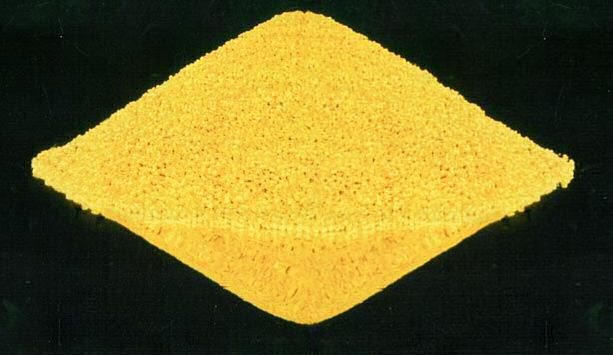
Rock to yellowcake. Uranium sits at roughly 2.8 parts per million in average continental rock, more abundant than silver, tin or mercury. Concentration is what makes it recoverable. Every method ends in the same standardized product, yellowcake (U₃O₈), the form in which uranium is shipped, weighed and priced. Three methods are in commercial use: open-pit mining, underground mining and in-situ recovery. Depth, geometry, grade and the permeability of the host rock decide among them.
Conventional mining. Open pits work ore within roughly 100 meters of the surface, as at Namibia’s Rössing and at Husab, where first production came in December 2016. Underground mines cut ore from stopes and need active ventilation against radon. Olympic Dam in Australia recovers uranium as a byproduct of copper. The Athabasca Basin is the extreme case. McArthur River and Cigar Lake run 15–20% U₃O₈, against a world average below 1% for conventional mines and 0.05–0.15% for most ISR ore. McArthur River mines remotely with raised boreholes and water jets and pipes slurry to Key Lake. Cigar Lake freezes the ground and uses jet boring.
In-situ recovery. ISR now supplies the majority of world production. Kazakhstan drove the shift through the 2000s and by the mid-2010s produced about 40% of global output, almost entirely by ISR. The ore must lie in permeable sandstone within a confined aquifer. Uranium moves under oxidizing conditions and precipitates under reducing conditions, and ISR runs that roll-front chemistry in reverse. The lixiviant is a bicarbonate solution with oxygen or hydrogen peroxide, or dilute sulfuric acid in Kazakhstan and at Peninsula Energy’s Lance project. The pregnant leach solution passes through ion exchange resin, and the eluate is precipitated, dried and packaged. Wellfields are developed in sequential mine units. Ur-Energy’s Shirley Basin began capturing uranium-bearing solution on April 23, 2026, about 24 months after a March 2024 construction decision. The constraint is geological: the method needs adequate hydraulic conductivity and hydrology that can be controlled.
Milling. Conventional milling is a hydrometallurgical process. Crushed ore is leached, filtered, concentrated by ion exchange or solvent extraction, precipitated and dried to yellowcake at roughly 80–85% uranium by weight. The recovery rate runs 90–95% at conventional mills and generally 70–90% for ISR.
What milling leaves behind. Mill tailings keep the uranium decay chain. The daughter isotopes thorium-230, radium-226 and lead-210 were in secular equilibrium in the ore, and milling breaks that balance. Radium-226 decays to radon-222, and tailings must be managed on timescales of thousands of years. The Cold War boom ran hundreds of mines across Utah, Colorado, Arizona and New Mexico, many on Navajo Nation land. Miners breathed radon in workings where the risk was known to administrators and not communicated to workers. The Radiation Exposure Compensation Act followed in 1990. The EPA has identified more than 500 abandoned uranium mines on the Navajo Nation alone. The Uranium Mill Tailings Radiation Control Act of 1978 covered 24 designated processing sites. A new ISR permit today typically takes 5–10 years, which the book calls the regulatory architecture built in response to those harms.
Market suppression. From the early 1990s to about 2020 the market was oversupplied. Down blending under Megatons to Megawatts turned about 500 metric tons of weapons HEU into about 15,000 metric tons of LEU (low-enriched uranium) between 1993 and 2013, roughly 350 million pounds of U₃O₈ equivalent. After Fukushima the spot price fell from its 2007 peak of $135/lb to below $18 by late 2016. Mines went to care and maintenance and the engineering and geological workforce contracted. Cameco suspended McArthur River, capable of roughly 18 million pounds a year and about 12% of global demand, from early 2018 through 2022. The spot price reached the $50s by mid-2022, the $80s through 2024–2025, briefly topped $100 in late January 2026, and stood near $86 in May 2026. A conventional underground mine still takes 10–15 years from discovery to production and an ISR project 5–10.
Western mines and the mine gate. US production covers less than 1% of US requirements, which the book treats as a policy and economic artifact. Ur-Energy’s Lost Creek (producing since 2013) and Shirley Basin hold a combined licensed capacity of 4.2 million pounds a year. Lance resumed production in late 2025 with 2026 guidance of 0.4–0.5 million pounds, and Uranium Energy Corp runs a hub-and-spoke model in Wyoming and Texas. Yellowcake leaves in drums of about 400 kg. Kazakh output travels by rail through Russia or by air. Athabasca output goes to Blind River and Port Hope, and Namibian output ships through Walvis Bay. Annual US requirements are roughly 40–50 million pounds.
Chapter 5 — Conversion
The bottleneck. Conversion turns yellowcake into uranium hexafluoride, UF₆. The book calls it “the most acute single-point vulnerability in the entire US nuclear fuel supply chain.” Without it there is no enrichment and no fuel for the light-water reactors that generate about 19% of US electricity. The United States has exactly one operating commercial conversion plant, in southern Illinois, running in various forms since 1958.
Why UF₆. Enrichment separates isotopes by mass, so the uranium must be a gas. At atmospheric pressure UF₆ undergoes sublimation at 56.5 °C, and its triple point sits at 64 °C and 1.5 bar. No other uranium compound combines that volatility with adequate stability. The price is reactivity. UF₆ hydrolyzes in moist air to uranyl fluoride and hydrogen fluoride, which is acutely toxic and corrosive. Every plant and container is engineered around that property.
The dry route. Yellowcake carries impurities such as molybdenum, vanadium, phosphorus, arsenic and silica, so conversion is purification followed by fluorination. The dry fluoride volatility process at Metropolis Works dissolves yellowcake in nitric acid, purifies the uranyl nitrate by solvent extraction and calcines it to uranium trioxide (UO₃). Hydrogen reduces that to uranium dioxide (UO₂). Hydrogen fluoride turns it into uranium tetrafluoride (UF₄), the “green salt,” and elemental fluorine completes the step to UF₆. Fluorination is the most hazardous stage and needs nickel alloys and certain stainless steels that form a passive fluoride layer. Operating commercial conversion plants number in the single digits worldwide. The wet process, used in Canada and at Orano’s Malvési, reaches UF₆ by a different route, and the book judges neither route unambiguously superior.
Five countries. Canada converts at Cameco’s Blind River (yellowcake to UO₃) and Port Hope (UO₃ to UF₆ or UO₂). France runs Malvési (to UF₄) and Tricastin (to UF₆). Russia converts at Seversk and Angarsk and, until recently, served a significant portion of the Western market through TENEX. One tactic was enrichment underfeeding, which lowers the tails assay and yields surplus UF₆ sold as a conversion-equivalent service. China’s CNNC serves mainly domestic demand.
Metropolis Works. The plant on the Ohio River was built for the weapons program. Honeywell idled it in November 2017, and it restarted in July 2023. In October 2025 it passed to Solstice Advanced Materials, which in February 2026 projected over 10,000 metric tons of UF₆ for 2026 against a backlog above $2 billion. ConverDyn markets all output. Nameplate capacity was 15,000 tons, administratively capped at 7,000 in 2017, and the NRC license runs to 2060. The United States uses about 18,000 tons of UF₆ a year, a figure set to grow with higher capacity factors and new reactors, so Metropolis covers somewhat over half. As recently as 2023, Russian sources served about 24% of US enriched uranium demand. A failure at Metropolis would have no domestic substitute.
New capacity on a slower clock. Solstice is pursuing a production ramp, debottlenecking, and a feasibility study for a “Metropolis 2.0” sister plant due before the end of 2026. FluxPoint Energy, launched at CERAWeek in March 2026, plans a modular volatility-process plant of about 2,500 tons a year, with first production targeted for 2030–2031. Uranium Energy Corp’s United States Uranium Refining and Conversion Corp is designing about 10,000 tons a year with Fluor and secured an NRC docket number in early 2026. Licensing historically takes five to ten years. The federal government issued $2.7 billion in January 2026 task orders for LEU and HALEU enrichment, and no comparable program exists for conversion. Enrichment can answer the Russian phase-out within years through Western alternatives. Conversion cannot build new capacity on that timescale.
Beyond UF₆ and the handoff. Thorium molten salt reactors would need thorium tetrafluoride chemistry that does not exist at Western commercial scale. MOX bypasses UF₆ for its plutonium, and HALEU still passes through standard conversion, so its bottleneck lies at enrichment. UF₆ ships in 48G cylinders of about 2.5 metric tons. Pricing changes at each step: yellowcake in pounds of U₃O₈, conversion in dollars per kilogram of uranium as UF₆, and enrichment in separative work unit (SWU)s.
Chapter 6 — Enrichment
The gap to bridge. Natural uranium is 99.3% U-238 and 0.7% U-235. Light-water reactors, which produce about 70% of the world’s nuclear electricity, need 3–5%. LEU+ applications need 5–10%, HALEU designs 10–20%, and naval reactors run above 90%. The two isotopes are chemically identical and differ only by three atomic mass units. That small difference, exploited across hundreds or thousands of stages, is the whole basis of enrichment.
Separative work. A SWU measures separation effort, not mass. It depends on the feed, the product assay and the tails assay. One kilogram at 4.5% takes about 6.2 SWU and 10.2 kg of natural feed, and it leaves about 9.2 kg of tails at 0.3%. A lower tails assay saves uranium and spends more SWU, so enrichers set it by relative prices. The tails assay is therefore an economic lever as well as a process setting.
Diffusion and the centrifuge. Gaseous diffusion raised the U-235 concentration by a factor of about 1.004 per stage, needed about 1,400 stages and used about 2,400 kWh per SWU. The last of the three US plants (Oak Ridge, Paducah, Portsmouth), Paducah, stopped enriching in 2013, and diffusion is now retired from commercial enrichment worldwide. Centrifuges spin UF₆ at peripheral speeds approaching the speed of sound, at tens of thousands of times gravity, and use about 50 kWh per SWU. Their rotors are made of maraging steel, carbon fiber or high-strength aluminum. Procurement of rotor materials, vacuum pumps and frequency inverters left signatures in the programs of Iran, Pakistan and Libya, and the Nuclear Suppliers Group controls exports.
Four entities. Rosatom’s TENEX holds about 35% of world capacity across four Russian sites. Urenco holds about 30% at Capenhurst, Almelo, Gronau and Eunice, New Mexico. Orano holds about 15% at Georges Besse II. Centrus, successor to USEC (United States Enrichment Corporation), holds under 5% at Piketon, Ohio. In 1985 the United States held about 64% of world capacity. Today it holds under 10%, most of it Urenco’s European-owned plant. After the Cold War, Russian enrichers entered Western markets at prices US plants could not match, and the 2022 invasion of Ukraine exposed the concentration.
HALEU: physics and politics. Higher enrichment allows compact, high-power-density cores and longer refueling intervals for small modular reactor (SMR)s and microreactors. The 20% boundary, however, is a 1970s nonproliferation construct. The book notes that the fission cross-section data show no threshold at 20%. Below it, material falls under standard IAEA safeguards. At 19.9%, the book says, HALEU “is simultaneously better physics and better politics.” In April–May 2026 the NNSA, the UK, the IAEA (International Atomic Energy Agency) and Venezuelan authorities removed 13.5 kg of HEU from a decommissioned research reactor outside Caracas and took it to the Savannah River Site for down blending to LEU or below. Piketon is the only US plant licensed for HALEU and makes about 950 kg a year.
A third technology. The book reads laser enrichment as delayed commercialization of Cold War national-laboratory physics, now pulled forward by HALEU demand and the Russian phase-out. SILEX, licensed to Global Laser Enrichment (Cameco 49%), excites U-235F₆ with light at about 16 micrometers, Raman-shifted from a CO₂ laser. GLE reached TRL 6 in 2025 and has applied for a Paducah plant to re-enrich government tails. ASP Isotopes’ Quantum Leap Energy ionizes U-235 in metal vapor, in the AVLIS tradition. In May 2026 it signed an MOU with a European developer for HALEU, with deliveries projected from 2028. LIS Technologies’ CRISLA, conceived by Jeff Eerkens at Los Alamos, uses about 5 micrometers, reached TRL 4 in March 2025, and plans an LEU-3 plant at Oak Ridge costing over $1 billion. Laser methods project 10 kWh per SWU or less and can in principle reject U-236 (uranium-236). Reprocessed uranium carries residual U-235 and 0.4–0.5% U-236. None of the three has run at commercial scale.
The 2028 deadline and the second stream. The Prohibiting Russian Uranium Imports Act, enacted in 2024 alongside the ADVANCE Act, bans Russian uranium by 2028. Urenco’s first LEU+ trial run at Capenhurst concluded on May 1, 2026, with samples at 7%, a first for a UK plant. The book judges the enrichment reorientation economically disruptive and the conversion reorientation structurally more acute. Tails leave at 0.2–0.3%, and the United States holds about 700,000 metric tons of depleted uranium in Kentucky and Ohio. It is classed as waste, but in a fast breeder cycle it is fertile feedstock for a reactor that breeds Pu-239 faster than it consumes its own fissile core. Enriched product ships in 30B cylinders of about 2.2 tons. It goes on to become a pellet, a TRISO (tristructural isotropic) particle, metallic fuel or a dissolved salt.
Chapter 7 — Fuel Fabrication
Fuel as containment. The UF₆ that arrives at a fabrication plant reaches the reactor four to six months later as pressed, sintered, sealed and assembled hardware. The fuel form is the first containment for fission products. It governs how they are retained in normal operation and under accident conditions. The book’s summary: “In the most advanced designs, the fuel is the safety system.”
The LWR standard. In reconversion, UF₆ is reacted with steam and reduced with hydrogen to UO₂ powder, a black ceramic that melts at about 2,847 °C. Pellets about 8–10 mm across and 10–15 mm tall are pressed and then densified by sintering at about 1,700 °C under hydrogen. Their microstructure controls how fission gases, mainly krypton and xenon, behave over three to five years in the reactor. Pellets go into cladding tubes of zirconium alloy (generically Zircaloy) about four meters long and under a centimeter across. Rods are backfilled with helium and welded shut. The cladding metal, zirconium, is chosen for its low neutron absorption cross-section, strength and corrosion resistance. Assemblies hold 200–300 rods, and a large LWR core holds 150–200 assemblies. nuclear-grade zirconium must be essentially free of hafnium, a separation done at only a limited number of facilities, so fabrication carries its own supply risk.
TRISO. A TRISO particle is a containment vessel about one millimeter across. An oxide or oxycarbide kernel sits inside four layers: a porous buffer of pyrolytic carbon, dense inner pyrolytic carbon, silicon carbide, and dense outer pyrolytic carbon. The silicon carbide layer is the primary structural and fission product barrier and melts above 2,700 °C. In the Advanced Gas Reactor program at Idaho National Laboratory (INL), particle populations showed failure fractions below one in 100,000 at over 1,600 °C held for hundreds of hours. The safety claim shifts from preventing fuel failure to physically eliminating certain failure modes. Particles are compacted into 6 cm pebble bed spheres, as for Kairos and China’s HTR-PM, or into prismatic blocks for X-energy’s Xe-100.
Metallic fuel. Fast reactors use uranium-zirconium alloy with about 10% zirconium by weight. Uranium metal conducts heat about five times better than UO₂, and the zirconium raises the solidus temperature and improves dimensional stability under irradiation. TerraPower’s Natrium, under construction at Kemmerer, Wyoming, uses this fuel and is designed for pyroprocessing. That process never produces separated plutonium metal, which is directly weapons-usable. HALEU metallic fuel fabrication barely exists in the Western commercial sector.
Molten salt and MOX. Molten salt reactors dissolve uranium tetrafluoride in lithium fluoride or lithium-beryllium fluoride salt, so fuel and coolant are one substance. Fuel preparation becomes chemical-plant work, and a thorium salt cycle would have to be built from scratch. MOX mixes plutonium and uranium oxides for unmodified LWRs. It needs gloveboxes with HEPA filtration. France’s MELOX at Marcoule supplied 24 EDF reactors as of 2024, about two-fifths of the fleet. The US Mixed Oxide Fuel Fabrication Facility (MFFF) at Savannah River was canceled in 2018 after about $8 billion.
The HALEU gap. Conventional US fabrication is adequate for the 93-reactor fleet. Westinghouse fabricates at Columbia, Framatome at Richland and Global Nuclear Fuel at Wilmington. In May 2026 Framatome received about $8 million from DOE to add roughly 200 metric tons of uranium a year. The book lays out three sequential bottlenecks for advanced reactors: HALEU enrichment, then TRISO fabrication, then HALEU metallic fuel for fast reactors. TerraPower is developing the last in parallel with Natrium. If reactor construction outpaces fabrication, the bottleneck migrates downstream from enrichment to fabrication.
No single actor. No non-state commercial entity runs the full chain from mine to fuel assembly. The vertically integrated suppliers, Rosatom and CNNC, are state enterprises. Cameco mines, converts and holds 49% of GLE. Urenco enriches, Orano converts, enriches and fabricates, and Westinghouse fabricates only. The Western chain is “integrated by contract, not by ownership,” efficient in stable markets and fragile when a major supplier is removed.
Supporting appendices
- Appendix XII — Physics and Mathematics. The Separative Work Unit section gives the value function V(x) = (1 − 2x) × ln((1 − x)/x) and the feed and tails balances. Its worked LWR example (4.5% product, 0.71% feed, 0.3% tails) gives F/P = 10.24, W_t/P = 9.24 and 6.23 SWU/kg, and the appendix states that this confirms Chapter 6’s 6.2 SWU. It compares diffusion (≈2,400 kWh/SWU), centrifuge (≈50) and projected laser (≈10), and finds an enrichment energy return of about 145:1. The secular-equilibrium subsection explains Chapter 4’s tailings, and the cross-section table shows why zirconium (σ ≈ 0.011 b) is used for cladding.
- Appendix XIII — Optional Problem Set. Problem 3-2, The Enrichment Audit, sizes a one-third reload of about 33 MT. The worked solution gives about 338 MT of feed, 305 MT of tails and about 205,600 SWU, and 10.28 GWh of centrifuge electricity buys 1,485 GWh. Problem 3-S, The Closed Cycle Case, counts the 700,000 MT of depleted uranium in a 785,000 MT U-238 stockpile worth about 530 years of US electricity.
- Appendix X — Industry and Landscape. The Fuel-Cycle Industrial Base category covers mining through fabrication, the HALEU chain and depleted-UF₆ deconversion. Specialized Nuclear Materials explains why cladding zirconium must be hafnium-free.
- Appendix XI — Atomic Structure. Its Isotopes section explains why U-235 and U-238 are chemically identical, so that a UF₆ cascade can exploit only their mass difference, and calls isotopes “the reason enrichment exists.”
- Appendix VIII — Glossary of Terms gives working definitions, with the chapter of first use, for every term marked here. Appendix IX — Regulatory and Policy Timeline places Megatons to Megawatts (1993–2013), the 2022 invasion, the 2024 import ban with its January 1, 2028 effective date, and the January 2026 enrichment task orders in sequence.
Longer technical notes and Top Stories tagged to Part II will appear on this page as they are published.


Leave a Reply